News
Sep 22, 2025
The Equine Season in the U.S. Is Coming — Do You Have Your B1/B2 Visa Ready?
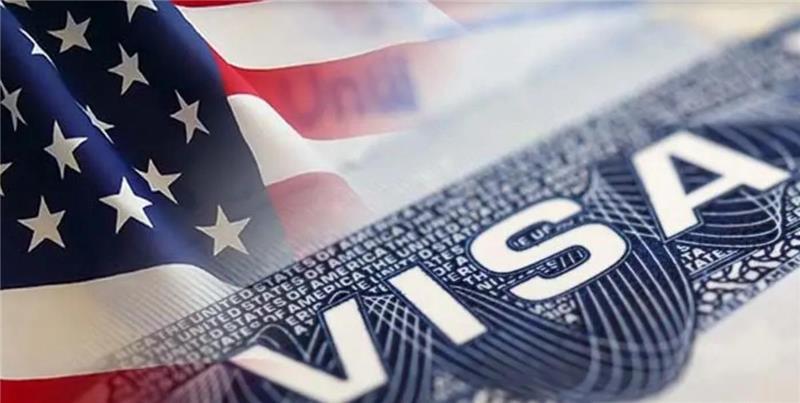


With the North American equestrian season around the corner — from Florida’s winter circuits to clinics, sales, and training opportunities across the U.S. and Caribbean — international riders, grooms, trainers, and farriers with valid B1/B2 visas will be in high demand.
If you don’t yet have yours and plan to spend the winter in the U.S. or surrounding regions, here’s what you need to know.
The B1/B2 Visa
•	B-1: Business purposes — attending horse shows, coaching, consulting, supporting a rider, scouting horses, or accompanying competition teams.

•	B-2: Tourism — leisure travel, visiting barns, spectating at events.

•	B-1/B-2: Combination visa, the most common for equestrian professionals.
It is valid for up to 10 years, with visits generally capped at six months. It isn’t designed specifically for the horse industry, but the U.S. State Department has confirmed it is the most appropriate option.
⚠️ Do NOT apply for a C-1 crewmember visa. That is for airline and shipping personnel, not equestrian staff.
⸻
Work Restrictions
•	Foreign equestrian staff may perform their duties in the U.S. provided they are employed and paid abroad, not by a U.S. stable or payroll.

•	Accepting employment while on a B-2 tourist visa is illegal and will get you deported if caught. Unlike in parts of Europe where enforcement is lax, the U.S. applies this rule strictly.

•	If you are offered a horse-related job while visiting as a tourist (B-2), you must first leave the country and re-enter under a B-1 classification with proper documentation (e.g. competition invitations, contracts).

•	Switching directly from one U.S. equestrian job to another without leaving is a grey area and should be avoided. Safer: exit and re-enter with new paperwork.
⸻
Plan Ahead
From 6 September 2025, you may only apply in your country of nationality or residence. You can no longer “shop around” at embassies abroad for earlier appointments.
👉 Check appointment wait times here: Visa Wait Times.
⸻
How to Apply
1.	Fill out the DS-160 visa application.

2.	Book an appointment at the U.S. embassy or consulate in your country of nationality or residence (full list here).

•	Some consulates allow urgent appointments if you have fixed event dates (e.g. FEI competition entries).

3.	Prepare documents:

•	DS-160 confirmation page & visa fee receipt (~US$185).

•	Passport (valid at least 6 months beyond your stay).

•	Two compliant passport photos.

•	Proof of residence ties: property papers, family ties, bank accounts, tax records, etc. (as required under 9 FAM 402.2-5(C)(5)).

•	Supporting equestrian documents: invitations to shows, contracts, stable letters, proof of competition entries, FEI registrations, farrier/vet assistant licenses.

•	Proof of financial means.

•	Old passports showing clean travel history (no overstays).

4.	Attend the interview, explain your purpose clearly (competition, training, support work) and prove strong ties abroad.
NB: For 17 nationalities (including Russia & Ukraine), B-1/B-2 visas currently cannot be issued at home. Check the official notice.
⸻
After the Interview
•	Some embassies require you to leave your passport until the visa is processed; others return it immediately. Always check the consulate’s rules in advance.

•	Processing may take days or weeks. Some offer courier return. If you need urgent travel, request an exception (politely).

•	Once issued, check your visa carefully: name spelling, type (B-1/B-2), and validity dates.
⚠️ Occasionally, officers annotate visas with specific restrictions (e.g. tied to one stable or event). If so, the visa cannot be used for other equestrian employers, and a new one will be required.
⸻
Entry & Exit
•	A valid visa is not a guarantee of entry. At immigration, be prepared with show schedules, contracts, or travel itineraries.

•	Officials in horse-heavy states like Florida are familiar with equestrian traffic, but always carry documents proving your purpose.

•	Track your I-94 arrival record online: I-94 CBP Portal. Do not overstay.

•	Avoid “visa runs” to the Caribbean or Mexico just to refresh your stay, as this can raise suspicions. If leaving for legitimate competitions, bring paperwork proving it.
⸻
ESTA as an Alternative?
•	ESTA (Electronic System for Travel Authorization) is available to citizens of Visa Waiver Program countries.

•	It allows tourism and some very limited business visits of up to 90 days.

•	You are not allowed to work under ESTA. That means no grooming, training, riding, farrier work, or any other equestrian services — even if unpaid.

•	ESTA can be used for short visits to attend shows as a spectator, to explore training opportunities, or to meet with potential clients.

•	For any hands-on equestrian work, whether on a farm, at a show, or supporting a rider, you must hold a B-1/B-2 visa.
⸻
Visa Revocations: A Growing Risk
As of September 2025, there have been cases of sudden B-1/B-2 revocations affecting foreign workers across industries, including equestrian professionals.
•	Reports include phone searches at airports, social media reviews, and denial of re-entry.

•	Posts suggesting you are “job hunting in the U.S.” can raise red flags.
Precautions:
•	Keep your social media clean of posts suggesting U.S. employment.

•	Travel with a minimal or “clean” phone.

•	Be consistent in your stated purpose (competition, support, etc.).
If revoked:
•	Do not reapply without consulting an immigration attorney.

•	Ask for the reason; many revocations cite misrepresentation under INA 212(a)(6)(C)(i).

•	If given the option, request Withdrawal of Application for Admission rather than Expedited Removal, to avoid a formal ban.
⸻
Final Tips
•	Apply well in advance of competition season.

•	Even if you don’t yet have a job lined up, bring recruiter adverts or event listings that mention B-1/B-2 eligibility.

•	Overprepare for the interview — bring everything from competition entries to photos of your horses at home proving ties abroad.

•	The U.S. assumes foreigners want to stay permanently — your job is to prove you don’t.
⸻
👉 Bottom line: the B1/B2 visa remains the most practical path for equestrian professionals traveling to the U.S. for competitions, training, and business. Be honest, document everything, and respect the rules — and you’ll be ready to make the most of the American equestrian circuit.
Enjoyed this article? Try another!
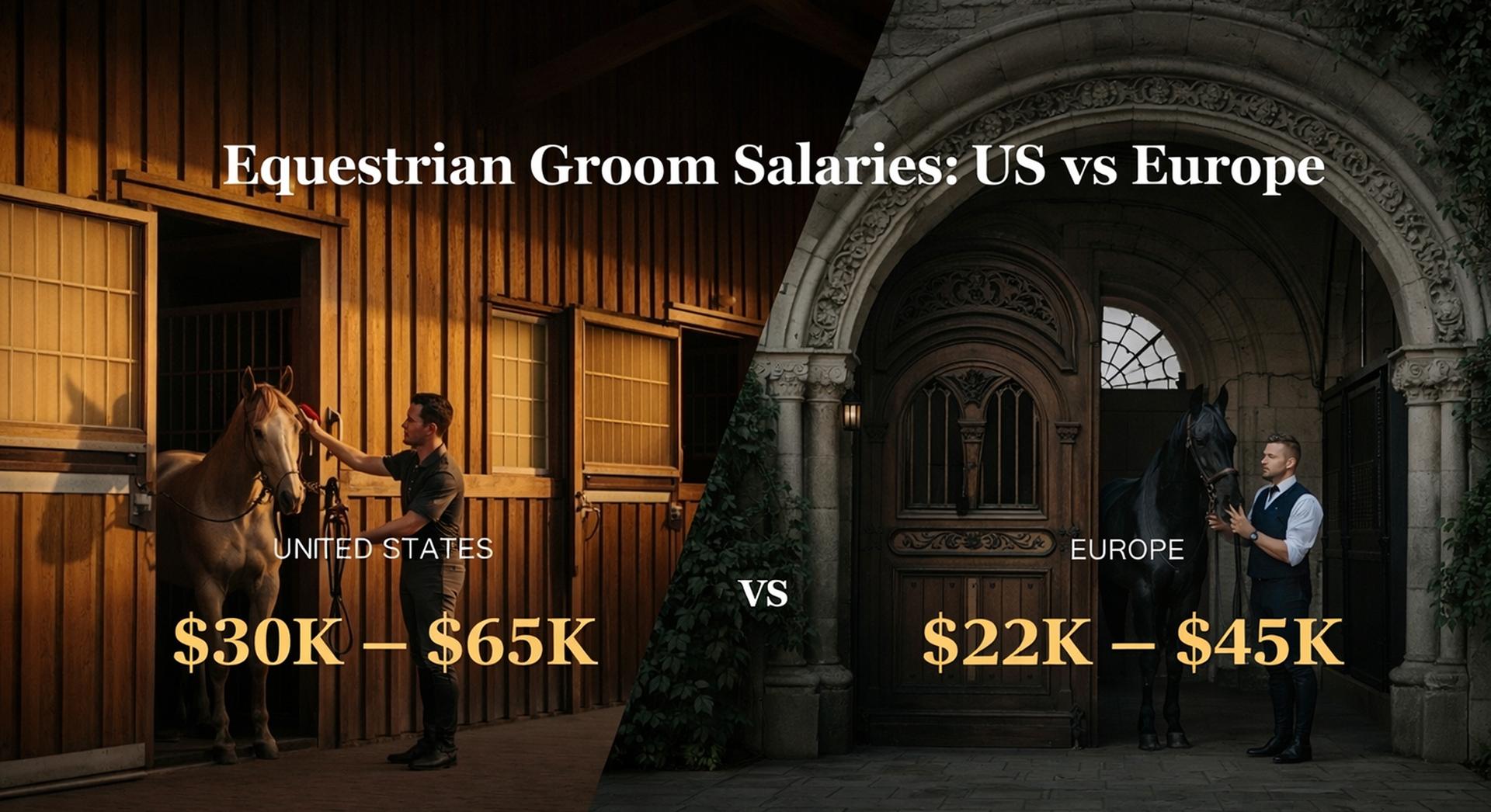
Equestrian Groom Salaries: US vs Europe — The Full 2025 Data Comparison
Exact 2025 salary data for equestrian grooms in the US vs UK, Germany, France, Netherlands & Ireland — compared side by side. Plus Yehaww: find better-paying groom jobs today.
see more

Discover Your Dream Equestrian Job with Yehaww Recruitment Database Software
The future of equestrian jobs is evolving through technology, and Yehaww Recruitment Database Software is leading the way.
see more

Company

Positions
Legal